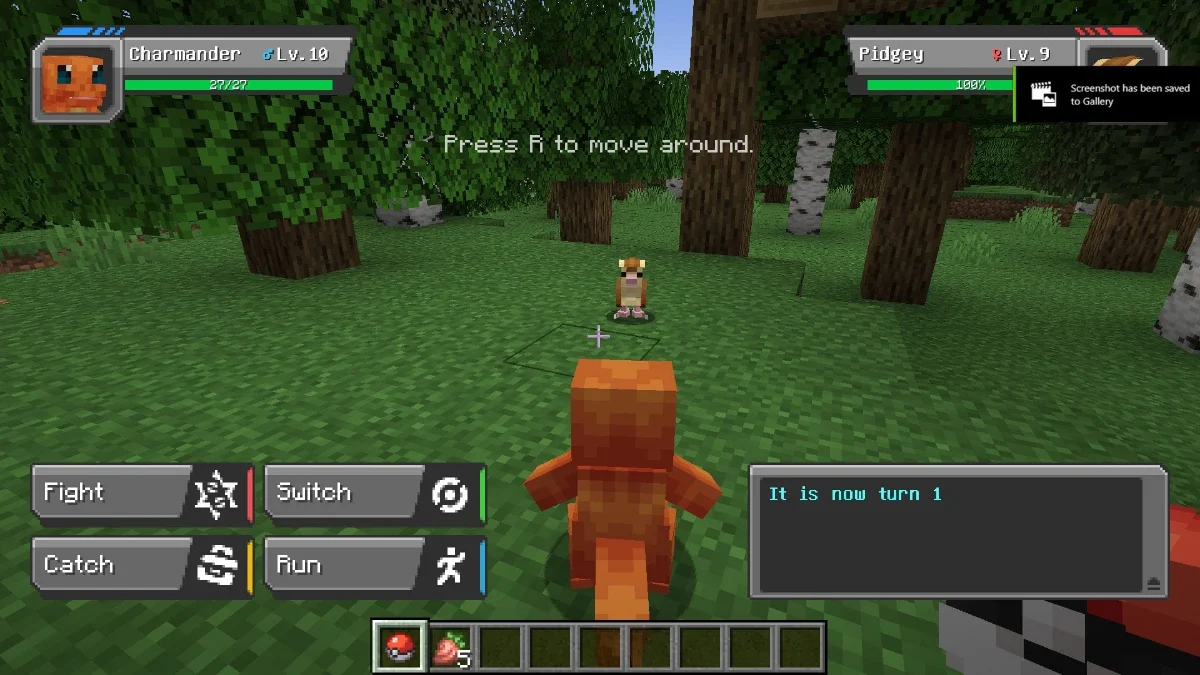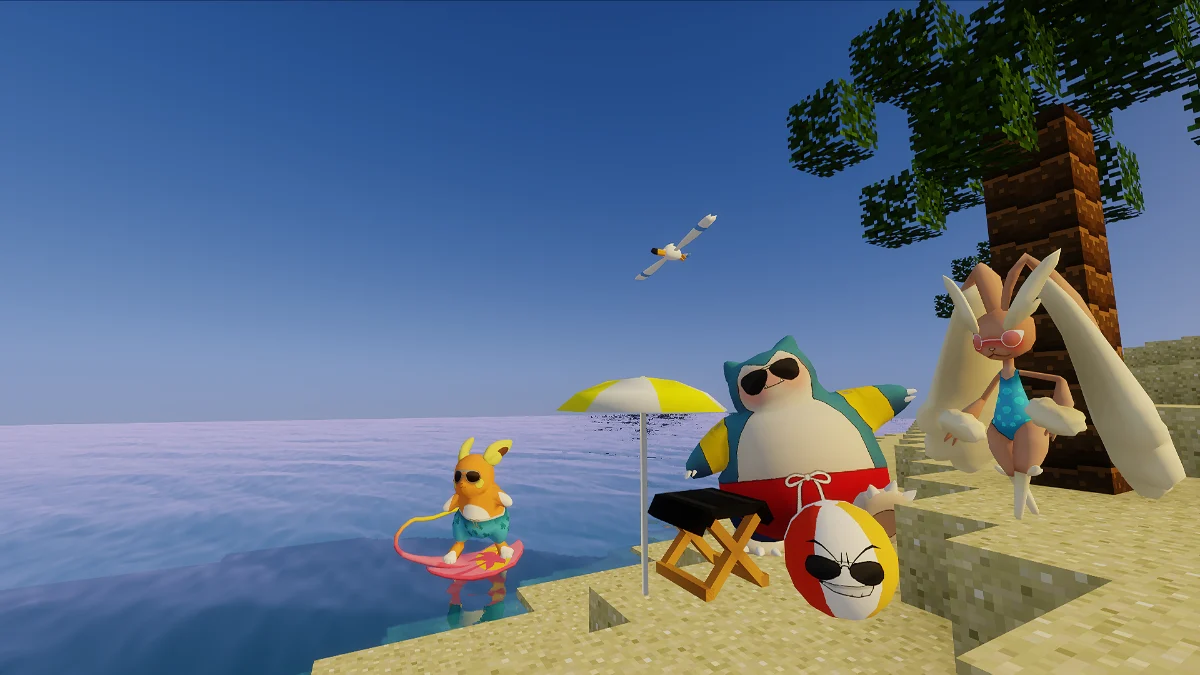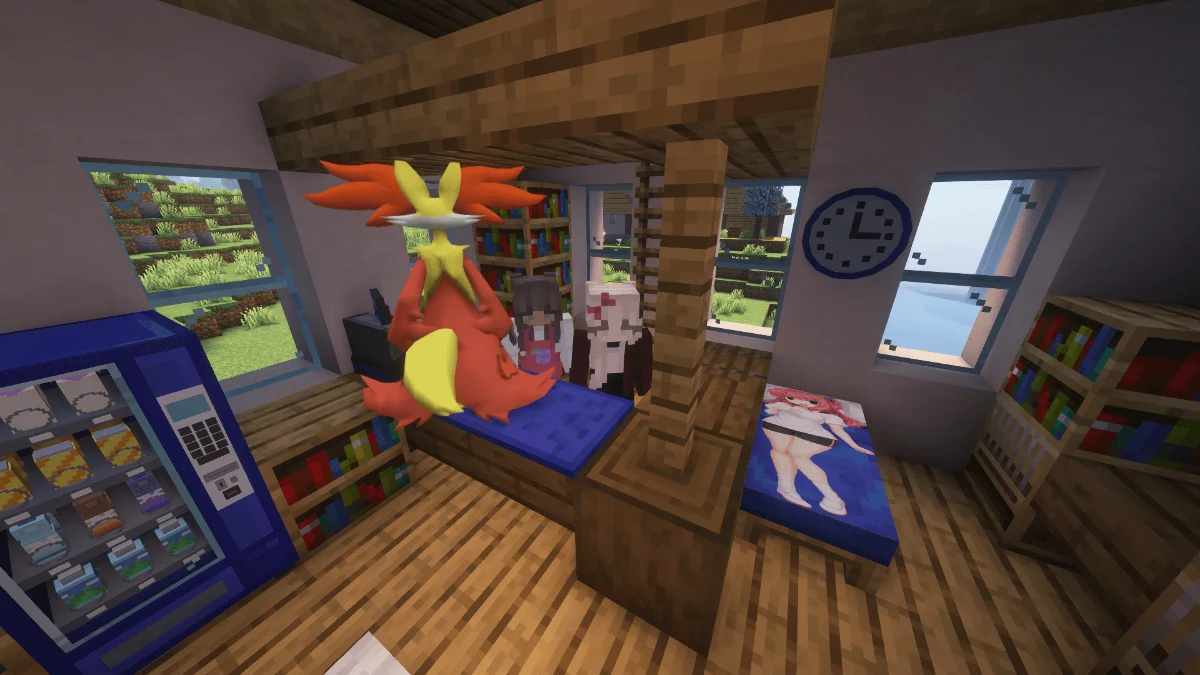
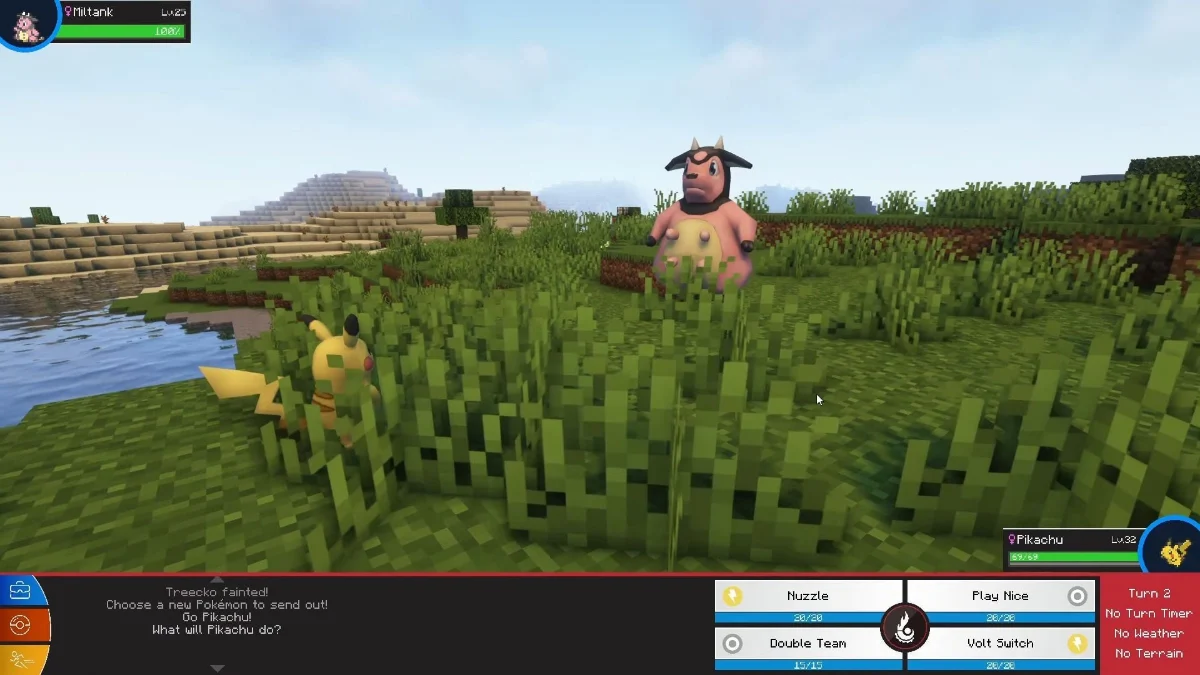
Pixelmon battle screenshot; interface appearance varies by release. Image: Gameplay image via Sportskeeda.
People often call it the Pixelmon game, but strictly speaking Pixelmon is a mod — an expansion that turns Minecraft: Java Edition into a creature-collecting adventure. It has been around since the early 2010s and is one of the most downloaded Minecraft mods ever. This guide explains what playing Pixelmon is actually like, from your first starter to endgame servers.
What kind of game is Pixelmon?
Pixelmon keeps everything you know from Minecraft — mining, building, crafting, survival — and adds hundreds of creatures from the Pokémon series that roam the world. You catch them, train them, battle other trainers and build a team. Battles switch to a turn-based screen with moves, types, abilities and status effects, much like the handheld games, while the rest of the time you are in a normal Minecraft world.
Name clash: Pixelmon the Minecraft mod is unrelated to a 2022 blockchain project that also used the name "Pixelmon". This site covers the Minecraft mod only.
Your first hour
- Choose a starter. When you first join a world, a menu lets you pick a starter companion.
- Gather apricorns. Apricorn trees grow around the world. Their fruit is the base ingredient for capture balls.
- Craft balls and a healer. Basic balls are crafted from apricorns and a few common materials; a healer block restores your team.
- Explore biomes. Different biomes, times and weather spawn different creatures, so travelling matters.
- Battle wild creatures to gain experience, weaken them and throw balls to catch them.
Core systems
Catching and the dex
Each species has a catch rate; weakening it and inflicting status conditions improves your odds. Caught creatures go to your party or to the PC block. The in-game dex tracks what you've seen and caught.
Battling
Battles use the familiar rules: speed order, type matchups, abilities, held items and stat changes. You can battle wild creatures, NPC trainers that spawn in the world, and other players on servers.
Training and evolution
Creatures level up, learn moves and evolve through levels, items, trades or friendship. Experienced players work with natures, IVs and EVs to build competitive teams.
Breeding
The day-care system lets compatible creatures produce eggs, which is how players hunt for better stats and rare variants.
Legendaries and shrines
Rare legendaries spawn on timers with low chances, and some are tied to shrines and special items. On servers, a legendary spawn is often a server-wide event.
Ways to play
- Single player: a relaxed adventure at your own pace, with your own rules.
- With friends: host a small server or a LAN world so everyone can trade and battle.
- Public servers: many communities run Pixelmon servers with gyms, economies, tournaments and custom quests.
- Modpacks: packs combine Pixelmon with other mods for building, exploration or tech progression.
What to expect performance-wise
Pixelmon is heavier than vanilla. Give it 6 GB of RAM, keep render distance moderate (8 to 12 chunks) and consider a performance mod. First loads are slow while assets are cached; later loads are faster.
Beginner tips
- Plant apricorn trees near your base early — you will need a lot of balls.
- Carry a few healing items before long trips; a healer block isn't always nearby.
- Look up evolution conditions before grinding levels.
- Build your first base close to several biome borders for variety.
Set a first-session goal you can finish
Pixelmon is a sandbox rather than a single prescribed route through a story. A manageable first goal helps you learn its systems without feeling that every creature or structure must be understood immediately. Choose a starter, find a suitable place to settle and learn how to return safely. A small base with storage can support later catching trips more effectively than an ambitious expedition with no supplies.
Give yourself time to learn the interface. Check the party display, creature summary and available moves. Practice the basic interaction controls in a low-pressure setting. If you are playing on a server, read its starting instructions before leaving the spawn area. The operator may provide a different early-game route, local facilities or rules that affect where you can build.
Make catching trips deliberate
A productive catching trip starts before you leave your base. Carry enough supplies for travel, space in your inventory and suitable capture items. Decide whether you are seeking a particular species, filling gaps in your collection or looking for a new team member. These goals can lead you to different areas and different choices about what to keep.
In battle, pay attention to your opponent’s health and your own team’s ability to keep fighting. A stronger attack is not always the best catching tool if it defeats the target immediately. Learn how useful status moves and controlled damage support your plan. Catching remains a chance-based activity, so avoid treating a single failed attempt as proof that the mechanic is broken.
Build a team with different jobs
A balanced party gives you more ways to respond when a battle changes. Think about what each member contributes rather than judging the team only by levels or rarity. One creature may provide dependable damage, another may help with catching, and another may cover a type matchup that the rest of the party struggles against.
Read move descriptions and pay attention to whether attacks use a creature’s stronger offensive stat. Consider accuracy, useful effects and the situations in which you expect to use a move. A famous species with an unsuitable set of moves can perform poorly, while a familiar early-game creature can remain useful when trained with a clear purpose. Build understanding alongside levels.
Let your base support your next adventure
Minecraft building still matters in Pixelmon. A clear storage system saves time when you are collecting materials, preparing equipment or looking for an item needed by your team. Separate common building materials from catching supplies and special items. Mark important locations so that a long trip does not end with a lost route home.
As your understanding grows, add facilities that support the activities you actually enjoy. A player who loves collecting may want more organised storage and preparation space. Friends who enjoy battles may build an arena with agreed rules. The world does not need to copy somebody else’s large server to become rewarding. A modest, useful base can give your own adventure a recognisable centre.
Learn from battles without risking everything
Choose opponents that let you observe the battle system. Type matchups, status conditions, switching and move choices become easier to understand when you can see why a turn succeeded or failed. If one creature repeatedly struggles, inspect the matchup and its moves before deciding that it needs only more levels.
After a difficult battle, identify one lesson rather than changing the whole party immediately. You may need a different coverage move, a better answer to a certain type or a safer catching strategy. Friendly battles are useful for practising these choices when both players agree on the format. Server tournaments may use restrictions, so read those rules before investing in a team built for a different format.
Keep multiplayer expectations clear
Pixelmon servers vary considerably. Some offer an open survival experience; others provide gyms, economies, quests or competitive events. These features depend on the server rather than being a promise made by every Pixelmon installation. Read the operator’s description and rules to understand what that particular world offers.
Before a trade, check the creature and terms shown in the trade interface. Agree on what is being exchanged and avoid relying on an informal promise of a later reward. Respect rules about claims, shared resources and battles. If a dispute involves a server’s economy or moderation, its own staff are the relevant contact. The mod developers cannot manage the decisions of every independent community.
Give a long-running world room to grow
A lasting Pixelmon world benefits from projects of different sizes. Small goals such as catching a new type can sit alongside longer plans such as building a regional collection or preparing a tournament team. When one project becomes repetitive, another can provide a reason to visit new places or work with friends.
Protect that progress with backups, particularly before changing releases or adding mods. Keep the version information with each backup so you know which installation created it. If a new update changes a mechanic, read the relevant notes before using your rarest items or opening your most valuable save. Good preparation keeps the focus on the adventure and makes experimentation easier to enjoy.
Choose your own measure of progress
Pixelmon does not require every player to value the same achievement. Completing a favourite evolution line, building a welcoming town or learning to win a fair battle can each be a meaningful milestone. Discuss shared goals with friends so that one player’s preferred pace does not become an obligation for everyone else.
When you feel uncertain about what to do next, look at the systems you have already enjoyed. A creature you caught might suggest a breeding project, a new team role or a journey to another biome. Let those discoveries shape your next session. The combination of Minecraft freedom and Pixelmon’s collecting systems is strongest when your world reflects choices you understand and care about.
Pixelmon FAQs
Is Pixelmon a separate game?
No. It is a free mod that runs inside Minecraft: Java Edition.
Is Pixelmon official Pokémon content?
No. It is a fan-made project and is not affiliated with Nintendo, Game Freak, The Pokémon Company or Mojang.
Can I play Pixelmon offline?
Yes. Single-player worlds work offline once the game, loader and mod are installed.
Conclusion
The Pixelmon game experience blends two things millions of people love: Minecraft's open-world freedom and the catch-train-battle loop of creature collecting. Install it, pick a starter and let the world surprise you.