
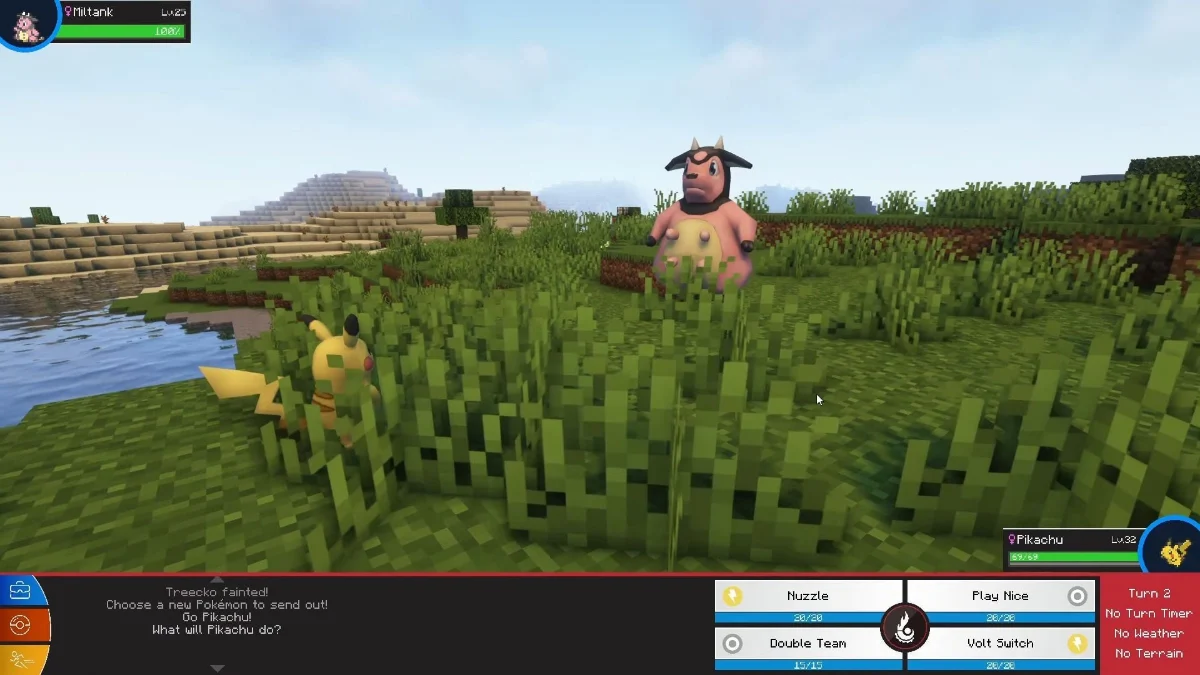
Pixelmon battle screenshot; interface appearance varies by release. Image: Gameplay image via Sportskeeda.
Pixelmon beginners have two adventures to learn at once: surviving and building in Minecraft, and catching and training a Pokemon team. You do not need to master both immediately. A small base, a dependable starter and a short local route provide a useful foundation. This guide follows a practical order so that your first session ends with progress you can understand and repeat, rather than a full inventory and no idea where home is.
Choose a manageable first goal
Decide what would make your first session successful before leaving your starting area. A sensible target is to choose your starter, establish a home location and return with one additional teammate. Completing that loop teaches movement, battles, storage and exploration without demanding rare encounters or expensive equipment. You can set a more ambitious target once you know how long a normal trip takes.
If you are joining a server, read its welcome information before wandering away. Starter choices, access to supplies and protected areas can differ from single player. Ask where beginners should train and whether a tutorial route exists. Treat the server instructions as the guide to that particular world; a video showing another server may include features that yours does not provide.
Pick a starter you want to use
The official starter reference describes the first Pokemon offered when a player joins a world and documents starter selection settings. The exact welcome experience can be customized. Choose a Pokemon you enjoy using rather than searching for a universal best choice. Your starter becomes one part of a larger team, and its weaknesses can be covered by later catches.
Once you have made your choice, open its summary and inspect its moves. Notice which attacks cause damage and which have other effects. Read what is available instead of assuming that every move behaves the same way. If you lose an early battle, review the opponent and your choices before deciding that your starter is the problem. Learning one team member carefully is more useful than constantly restarting.
Learn your controls before a long trip
Open Minecraft's controls menu and look through the Pixelmon key bindings. Modpacks can assign conflicting keys, and advice based on default controls may not match your profile. Check how to select a party member, send it out and open the information screens you need. Practice in a familiar area so that a missed key does not interrupt an important encounter.
Keep the initial exercise simple: select your starter, send it out, inspect the result and bring it back. Then check that you can open your inventory and identify your catching supplies. If a control does not respond, check for a key conflict before reinstalling the mod. A functioning profile with an inconvenient binding usually needs a small settings adjustment.
Build a base that supports short trips
Your first base needs to solve everyday problems. Store materials in clearly labeled containers, keep essential tools accessible and record the coordinates somewhere you can find them. A compact shelter beside a recognizable landmark is often more useful than an impressive building several minutes from the places you visit regularly. Leave room for later equipment instead of trying to finish the entire base immediately.
Separate travel supplies from building materials. Before heading out, carry what you need for the route and leave valuable spare items at home. When you return, restock the same inventory spaces. That routine reduces the chance of starting another expedition without the supplies you intended to take. If your server uses land protection, learn its claim rules before investing in a permanent home.
Make your first catching trip deliberate
Choose an area close to home and set a return condition. You might return after finding a teammate, using a set portion of your supplies or reaching the next landmark. Explore one direction at a time and record useful locations. Walking farther does not automatically improve a trip; returning with reliable knowledge of a nearby route can be more valuable.
During encounters, pay attention to the difference between weakening an opponent and defeating it. Choose actions that fit your goal. Avoid using your strongest attack automatically when you are trying to catch something. Keep enough supplies to handle more than one attempt, and accept that some encounters will end without a catch. A failed attempt can still teach you which moves and supplies to prepare next time.
Give teammates different jobs
An early team does not need perfect statistics. It benefits from members that solve different problems. Look at attack options, useful support moves and how comfortably each Pokemon handles the opponents you meet. A team built entirely around one kind of attack may struggle when a particular matchup appears. Add variety gradually rather than replacing every member after one difficult battle.
Try one change at a time. If you add a new teammate, use it on a familiar route before changing the rest of your party. You will learn what it contributes and where it needs support. Keep favorites if you enjoy them; collecting and exploration are valid goals alongside competitive battles. Decide what you want your team to do before measuring it against someone else's tournament lineup.
Keep useful notes and protect your progress
Write down a few practical observations: where your base is, where you found an interesting encounter and which opponent gave you trouble. Notes do not need to be elaborate. A small list of routes and goals saves you from repeating the same search every session. Separate confirmed observations from guesses so that one unlucky trip does not become a false rule about the world.
For a local world, make a backup before changing the modpack or testing a major update. Preserve the working profile until you know the replacement loads properly. On a multiplayer server, ask how world resets and player progress are handled. Avoid treating server ownership as the same thing as your own local save: administrators control that environment and may announce changes that affect your plans.
Common beginner mistakes
Trying to learn every system immediately can make a relaxing adventure feel like a checklist. Breeding, detailed stat training and competitive rules can wait until they serve a goal you actually have. First learn how to prepare a trip, use your party and return home. Those skills make later systems easier to approach because you already have a dependable routine.
Another common mistake is copying instructions without checking the release or server context. An old screenshot may show a different interface, while a server tutorial may rely on extra mods. Start with the official reference for a mechanic and then check your own environment. For installation help, use our download and loader guides rather than changing files in the middle of an otherwise successful play session.
A practical plan for your next three sessions
Use the first session to establish your routine rather than measuring progress by the rarity of your catches. Record home, arrange storage and finish a short trip with the supplies you intended to carry. At the end, write one sentence about what interrupted you most often. If the answer is running out of room, solve storage before planning a much longer expedition.
For the second session, choose a specific team goal. Perhaps you want an alternative attack option or a teammate you simply enjoy. Look up that species in the reference, identify the information relevant to your world and prepare a route. Keep a fallback activity in mind so that an unsuccessful search can still end with exploration, gathering or a useful map note.
Use the third session to review what you have learned in familiar battles. Compare your choices with the first session: are you selecting moves more deliberately, returning home reliably and carrying supplies that actually get used? Those changes show progress even if your collection is still small. Pick one new mechanic to learn next instead of opening every advanced system at the same time.
Learning with another new player
If you are starting with a friend, explain your goals before setting out. One player may want to catch everything while the other wants to build a base. Agree on a meeting point and a return time, then allow each person space to enjoy their preferred activity. Share observations about routes and controls without assuming that both teams need identical members. When one player discovers something useful, demonstrate the steps rather than handing over unexplained items. Both players will be better prepared for the next trip.
FAQs
Which starter should a beginner choose?
Do I need a competitive team immediately?
Why does my server look different from a tutorial?
Conclusion
Start Pixelmon with a clear first goal, learn your controls and make short trips from a dependable base. Use the Pokemon you enjoy, give teammates different jobs and keep notes about what you discover. A repeatable routine turns early uncertainty into steady progress and leaves plenty of room to choose your own adventure.
Reference: Official starter Pokemon reference. Check the documentation for your installed release; interfaces and server settings can differ.